Heritage
History & Heritage
Where the Air Cadet movement came from, and the story of the heritage building the squadron calls home. For 12 Edmonton's own beginnings, see the squadron history on our About page.
The Air Cadet movement
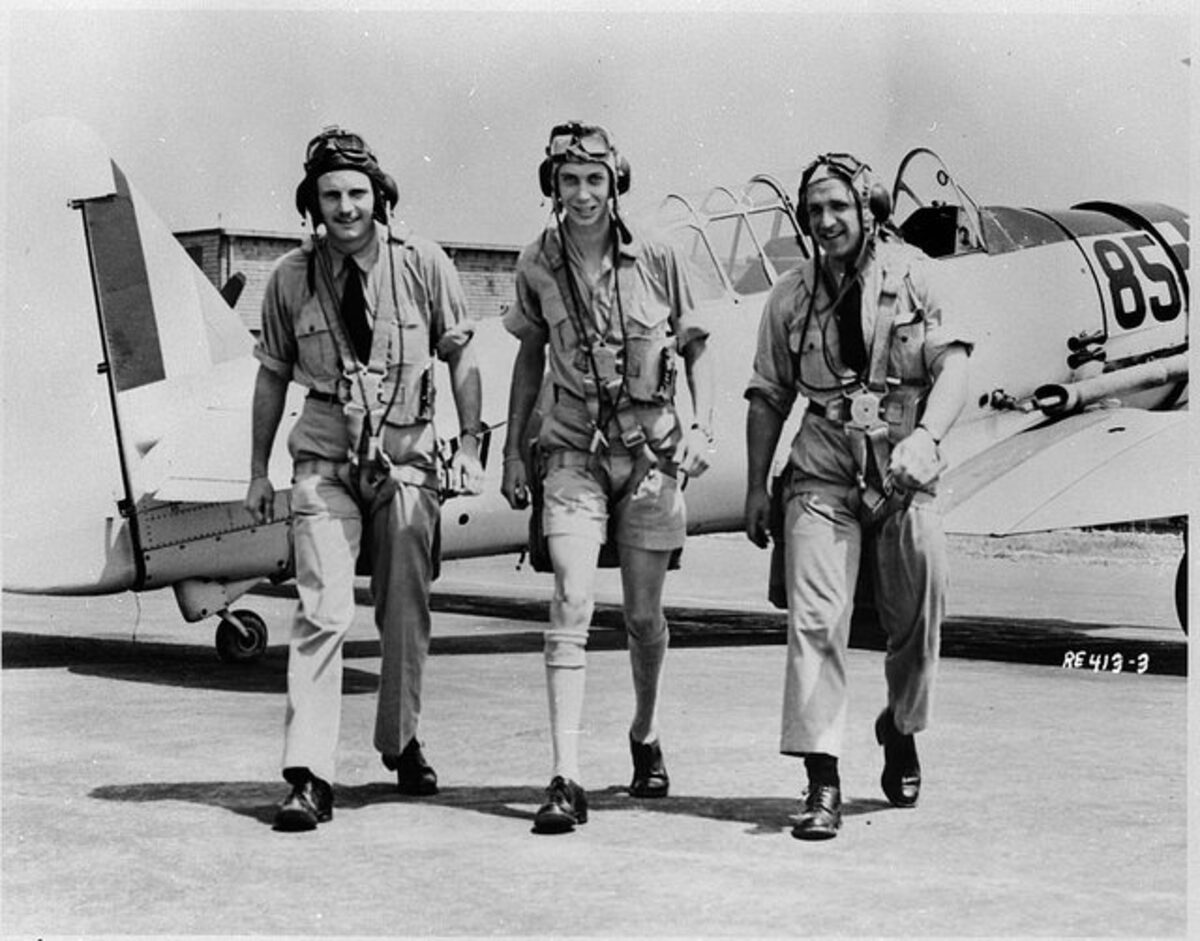
The Royal Canadian Air Cadets grew out of wartime need. In 1940, as Canada became the training ground for the air war, an Order-in-Council authorized the formation of Air Cadet squadrons. The cause was championed by Charles G. "Chubby" Power, the Minister of National Defence for Air, who wanted a national volunteer organization to prepare young men for the Royal Canadian Air Force.
On 9 April 1941 the Air Cadet League of Canada was chartered under Letters Patent. The application was signed by Air Marshal William "Billy" Bishop, the legendary First World War flying ace, along with George B. Foster and Hugh P. Ilsley. (The "1941" often cited as the movement's birth is the League's charter; the enabling Order-in-Council came the year before.)
The movement grew astonishingly fast. By September 1944 there were 374 squadrons, more than 29,000 cadets, and 1,750 officers. Between October 1943 and June 1944 alone, over 3,000 air cadets went straight into the wartime RCAF.
After the 1968 unification of the forces, the Canadian Armed Forces became the program's partner in place of the RCAF, working alongside the Air Cadet League of Canada, the civilian body that still supports squadrons today. On 30 July 1975, Parliament approved the enrolment of female cadets. The program now runs roughly 456 squadrons and more than 23,000 cadets across the country, still built on the same idea it started with: aviation, citizenship, and leadership for young Canadians.
Our heritage home
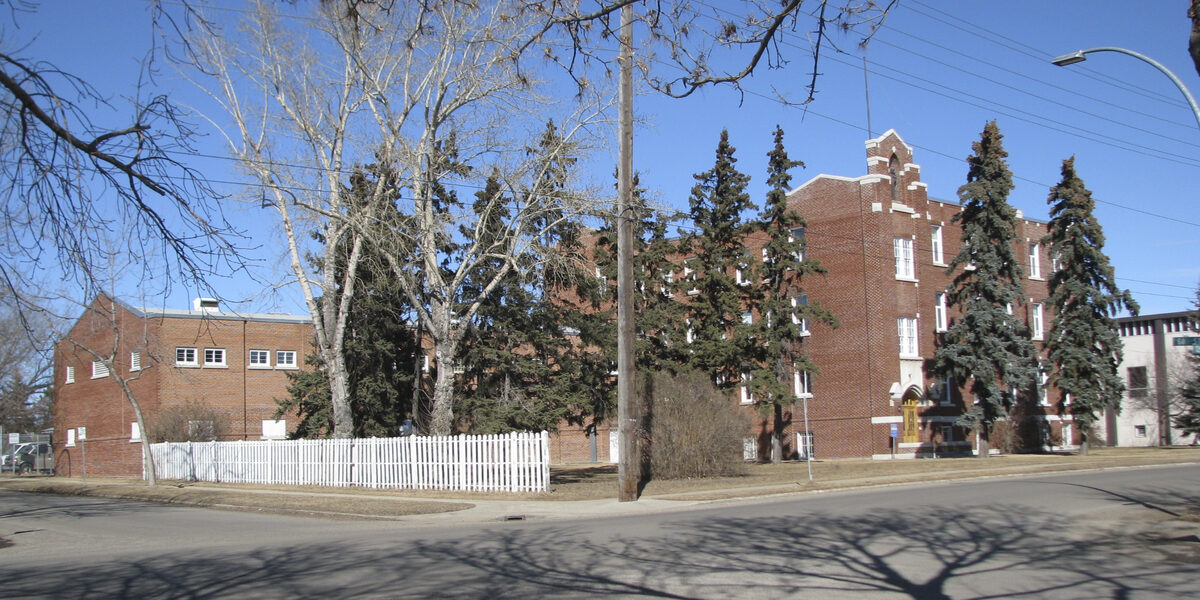
The squadron meets in a building with a deep history of its own. Its home at 6770 129 Avenue NW is part of St. Anthony's Seraphic College, an institutional complex begun in 1925, with additions in 1931, 1934, and 1946, designed by the architect Edward Underwood and built by J.P. Desrochers. In 2007 the Province of Alberta designated it a Provincial Historic Resource under the Historical Resources Act.
It was built by the Franciscan order as a college to train priests, and over time it grew into a spiritual and educational hub with a church, a college, a friary, and a gymnasium. The Franciscans established it to serve the working families, many of them immigrants from eastern European backgrounds, who settled in northeast Edmonton as the railway expanded. The college operated until 1970, after which it became a private boarding school, and for a time it was the seat of the Major Superior of the Ecclesiastical Province of Christ the King in Western Canada.
There is something fitting about an air cadet squadron, founded to serve and to shape young people, making its home in a place built for learning and service.
Read the full heritage listing on the Canadian Register of Historic Places →
Looking for the squadron's own beginnings, from W.W. Ireland's 1941 letter to today? Read the 12 Edmonton story on our About page.
Sources: the Air Cadet League of Canada history, the Canadian Register of Historic Places (St. Anthony's Seraphic College), and squadron records.