Ages 12 to 18 · Free to join
Join 12 Edmonton
Aviation, leadership, and citizenship for youth aged 12 to 18. Free to join, uniforms provided.
Now accepting new recruits
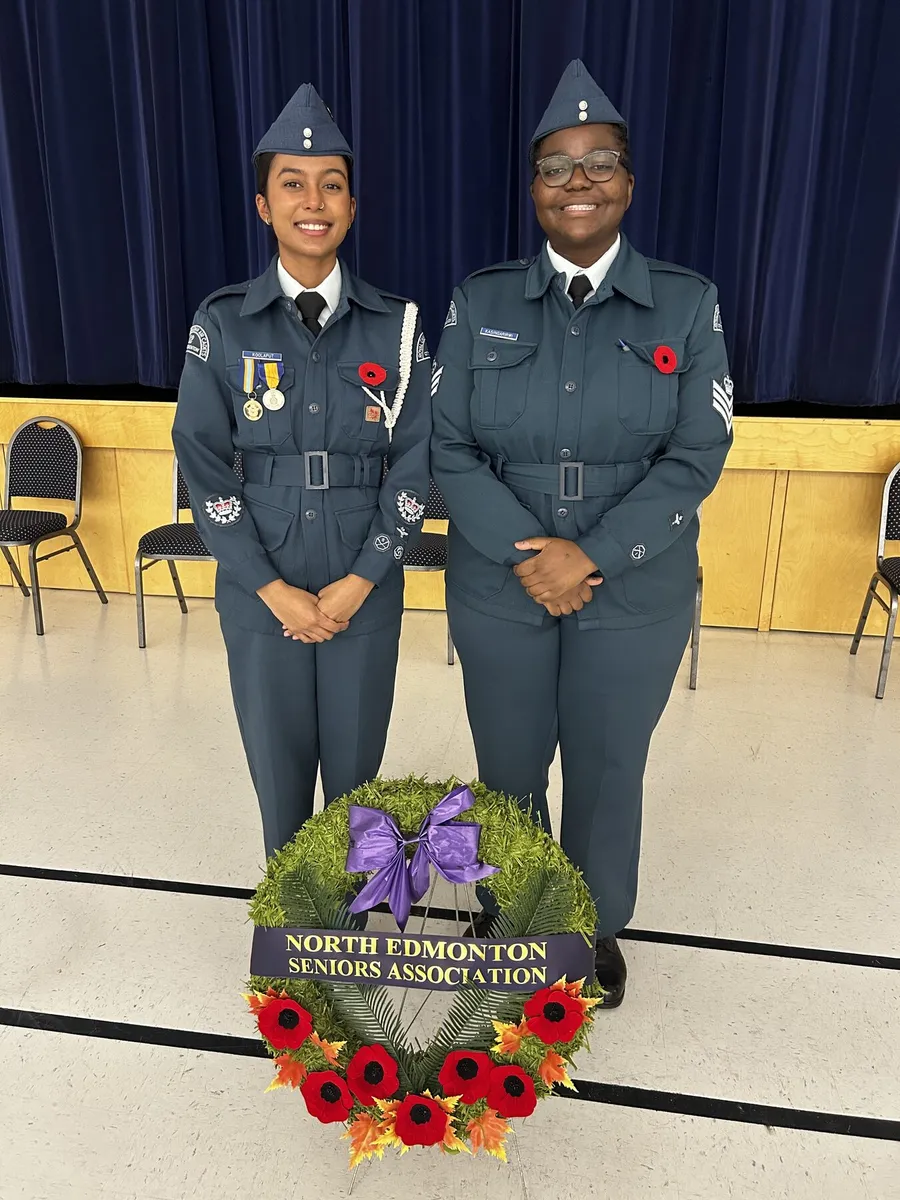
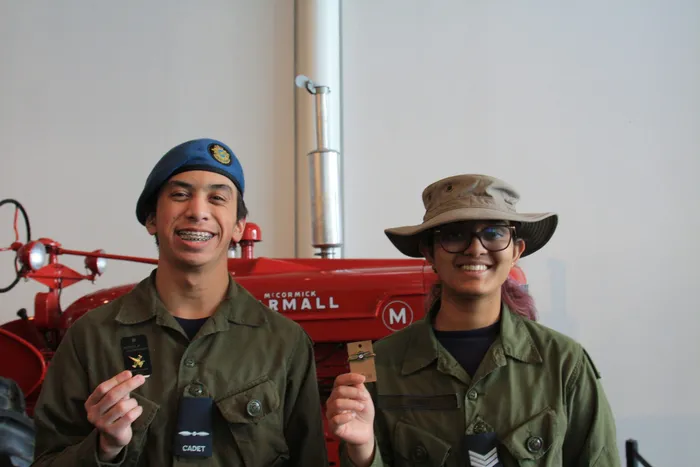
We are welcoming new cadets for the 2026-27 training year. New recruits can also join partway through the year, soon after turning 12.
Starting in September
Start of the 2026-27 year
The training year opens with a staggered start so the Commanding Officer and staff can welcome each group and review the year ahead. Start nights for 2026-27:
Sept 9
Levels 4 and 5
Senior cadets return first to review the year's plan and prepare to support the program.
Sept 16
Levels 2 and 3
Returning cadets in Levels 2 and 3 begin (alongside the seniors).
Sept 23
New recruits (Level 1)
First night for brand-new cadets. Come to 6770 129 Avenue NW; doors open at 18:00.
New recruits
Rookie Weekend
Soon after new cadets join in the fall, the squadron runs an optional Rookie Weekend: a two-day orientation that introduces Level 1 cadets to what it means to be an air cadet. New cadets learn the ropes, meet cadets from across the squadron, and have a lot of fun in the process. It is a relaxed, supportive start to the program, and it is not mandatory.
The program
What is the Air Cadet Program?
The Royal Canadian Air Cadet program is a federally sponsored youth program for Canadians aged 12 to 18. It is one of the largest youth programs in Canada, with squadrons in communities from coast to coast.
The program develops aviation knowledge, leadership, physical fitness, and good citizenship. Cadets participate in ground school, drill, marksmanship, effective speaking, fitness activities, community service, and, for many cadets, actual flying through gliding and familiarization flights.
Participation carries no military obligation. Cadets are not enlisted in the Canadian Armed Forces, and nothing about joining obligates a cadet or their family to any form of service.
Program at a glance
- Ages: 12 to 18
- Cost: Free to join; uniforms provided at no cost
- Obligation: No military service obligation
- Training nights: Wednesdays, 18:30 to 21:00 (doors 18:00), September to June
- Location: 6770 129 Avenue NW, Edmonton
- Residency: Must be able to reside in Canada
Vision
To be the best youth development program in Canada, developing young Canadians into confident, responsible citizens.
Mission
To develop in youth the attributes of good citizenship and leadership, a physical fitness level consistent with an active lifestyle, and stimulate an interest in the Air element of the Canadian Armed Forces, and aviation and aerospace.
Mandate
The cadet program is a federally funded, national program. Its mandate is to develop citizenship, leadership, and physical fitness in youth, and to promote interest in the Air element of the Canadian Armed Forces and in aviation and aerospace.
Why join
What cadets gain
Cadets come away with skills and experiences that serve them well into adulthood, all at no cost to families.
Confidence and leadership
Cadets grow in confidence and learn to lead, communicate, and take real responsibility.
Aviation and flight
Ground school, gliding, familiarization flights, and pilot scholarships put cadets in the air.
Travel and adventure
Funded summer courses across Canada, weekend field exercises, outdoor adventures like climbing and rafting, and international exchanges.
Friendships and teamwork
A close community of peers who share the same values, and a strong sense of camaraderie.
Life skills and fitness
Discipline, organization, first aid, physical fitness, citizenship, and community service.
Free, with no obligation
Uniforms, training, and summer courses are free, with no military obligation, and cadets receive a bonus at summer camp.
Cadets also build community-service and volunteer hours through the year, and senior cadets add more by helping lead and instruct on parade nights. Many count these toward their school's community-service hours, scholarship and post-secondary applications, or the Duke of Edinburgh's Award. The squadron can provide a record of hours, so check with your school on how it recognizes cadet time.
A cadet parent's perspective: why being an air cadet is worth it (an outside blog).
Eligibility
Who Can Join?
The Air Cadet program is open to any young person who meets the basic eligibility requirements below. There is no prior experience needed. Everyone starts from the same place.
Age
You must be at least 12 and not yet 19. By national regulation, a cadet ages out of the program on their 19th birthday, rather than finishing the training year.
Residency
You must be able to reside in Canada. Citizenship is not a requirement.
Cost
There is no fee to join. Uniforms are provided through DND funding at no cost to you. An optional annual Volunteer Bond of $150 per cadet helps fund a stronger program, and it is refundable through volunteering and fundraising. No cadet is excluded for inability to pay.
Registration
How to Register
Registration is handled through the national cadet portal. Follow the steps below:
- 1
Go to the registration portal
Visit registration.cadets.gc.ca/get-started.html and click "Get Started".
- 2
Search for our squadron
Search for "12 Edmonton, Royal Canadian Air Cadet Squadron" (that is how we are listed on the portal) to find and select our unit.
- 3
Complete the online form
Fill in the applicant's details and submit. You will receive a confirmation by email.
- 4
Come to a parade night with your documents
Bring your cadet to a Wednesday parade night. Doors open at 18:00. Bring the items listed below to finalize enrollment.
What to Bring on Your First Night
- Government-issued photo ID (the cadet's school ID or passport works; a parent or guardian's ID is also acceptable to establish age)
- Provincial health card
- Completed online registration, if submitted in advance
If you have not yet registered online, officers can assist you on the night. Just show up.
Questions about enrollment? Email us at 12air@cadets.gc.ca.
Training
What Does Training Look Like?
A Typical Wednesday Night
Doors open at 18:00 and cadets arrive by 18:15, already in uniform. The opening parade is at 18:30, with a formal fall-in, inspection, and flag ceremony. From there, cadets move through instruction periods covering topics in their level's curriculum. Common subjects include:
- Airmanship and aviation theory
- Drill and deportment
- Leadership and effective speaking
- First aid and fitness
- Marksmanship (range nights)
- Aerospace and ground school
There is a break around 20:00 when the canteen is open. The evening ends with a closing parade and announcements at 21:00, then dismissal and clean-up, with pick-up between 21:15 and 21:30.
The Five Training Levels
The Air Cadet program is structured into five proficiency levels. Cadets progress through each level over roughly one year, building knowledge and responsibility as they advance. Select a level to see its full topic list and outcomes on the Cadets page.
Level 1: Fundamentals
Introduction to the cadet program, aviation history, basic drill, fitness, and citizenship.
Level 2: Intermediate
Expanding aviation knowledge, leadership basics, survival skills, and community involvement.
Level 3: Advanced
More advanced aviation topics, first-aid certification, deeper leadership responsibilities.
Level 4: Senior
Cadets take on instructional and supervisory roles. Specialized training and summer-camp eligibility.
Level 5: Master
Senior leadership, mentoring junior cadets, and advanced specializations including pilot-scholarship eligibility.
Beyond Wednesday Nights
In addition to weekly training, cadets take part in field training exercises (FTXs) at various training sites, gliding and familiarization flights, marksmanship, drill, band, and cyber training (the squadron competes in CyberPatriot and Maple Defender), along with community service. Which activities run depends on the year. Mandatory events include the Annual Ceremonial Review (ACR) in spring, Remembrance Day, and designated fundraising.
In the field
Field training exercises (FTX)
A few times a year the squadron heads out for a Field Training Exercise, usually a weekend away at a training site. FTXs put what cadets learn in the classroom into practice in the outdoors, and they are a highlight of the year for many cadets.
What to expect
Hands-on training in navigation, survival skills, teamwork, and leadership, staying in cabins or tents depending on the season. Cadets travel together by bus from a set drop-off point.
How long
A weekend. Cadets usually leave late Friday afternoon and arrive by evening, train and take part in activities on Saturday, and depart Sunday afternoon for pick-up around 16:00, normally back at the LHQ where they were dropped off. Dates and location are sent home before each exercise.
What to bring
A full kit list goes home before each FTX. Parents can see a sample of what to pack on the For Parents page. Meals are provided from Friday evening through Sunday lunch (often field rations), so cadets only need to eat dinner before leaving on Friday.
Beyond the squadron
Summer training
Cadets can apply for funded summer courses at Cadet Training Centres across the country, from a two-week introduction to multi-week specialist courses. Most are open to cadets of all three elements (sea, army, and air); a few aviation courses and the pilot scholarships are specific to air cadets. All are optional, and selection is competitive.
Who can go, and when: summer courses require a cadet to have completed at least their first full training year. Every course, in person or online, needs Training Year 2 or higher, so first-year (Level 1) cadets are not eligible; the introductory summer course that new cadets could once attend is no longer offered. The longer specialist courses and the pilot scholarships need higher levels again, plus minimum ages of 16 or 17.
Open to all cadets
Popular courses shared across sea, army, and air cadets, and a great way to build a skill and meet cadets from across the country.
General training
The shortest summer course (about two weeks). Open once a cadet has finished their first year, it is a broad introduction to camp life and the streams cadets can specialize in.
Marksmanship
One of the most popular courses: air-rifle target shooting under close supervision, from the fundamentals up to coaching and competition.
Survival
Field and survival skills: shelter, navigation, and living and moving safely in the outdoors.
Fitness and sports
Physical fitness, coaching, and recreational and competitive sport.
Military band and pipe band
Music training for cadets who play, or want to learn, a band or pipe-band instrument.
Drill and ceremonial
Advanced drill, parade commanding, and ceremonial skills for cadets who enjoy the precision side of the program.
Air Cadet courses (limited spots, strong competition)
These aviation courses and the pilot scholarships are specific to air cadets. Places are few and selection is very competitive, based on a cadet's training level, performance, and a national selection board. See Scholarships & awards for how the flying scholarships work.
Aviation Technology and Aerospace
A two-week introduction to aerospace, airport operations, and aircraft manufacturing and maintenance.
Advanced Aviation
A longer course building specialist knowledge and instructional skill in aviation, communication, and meteorology.
Glider and Power Pilot scholarships
Multi-week summer courses where selected senior cadets train to fly solo and earn a Transport Canada glider or private pilot licence. Highly competitive, with very limited spots (glider from age 16, power from 17).
See the full list on the official Cadets summer training page, including the courses open to all cadets and the survival courses.
FAQ
Frequently Asked Questions
Is there a cost to join?
No. There is no fee to join the Air Cadet program. Uniforms are provided at no cost, funded through the Department of National Defence. Families are invited to contribute an optional annual Volunteer Bond of $150 per cadet, refundable through volunteering and fundraising. No cadet is excluded for inability to pay; confidential arrangements are available.
Is there any military obligation?
None. Cadets are not members of the Canadian Armed Forces. Joining does not create any obligation to enlist, and there is no pressure to pursue a military career. The program is a civilian youth organization, co-sponsored by the Air Cadet League of Canada and the CAF.
My child is 12. Is that old enough?
Yes. The program is open to youth who are 12 years old. If your child turns 12 before or during the training year (September to June), they are eligible to join.
What happens when a cadet turns 19?
By national regulation, a cadet must leave the program on their 19th birthday, not at the end of the training year. Many stay involved afterward: at 19 you can come back as a Civilian Volunteer or Civilian Instructor, or join the Cadet Instructors Cadre (CIC) as an officer, and others help through the Sponsoring Committee.
What does my cadet wear? Do we need to buy anything?
Uniforms are issued to cadets free of charge. Parents are responsible for keeping the uniform clean and pressed, and cadets learn to care for their own kit as part of the program. Optional civilian athletic wear (for sports and fitness) and cold-weather gear for outdoor activities are the main things families may want to provide. No major out-of-pocket purchases are required to participate.
How often does my cadet need to attend?
Weekly Wednesday parade nights are the core of the program and attendance is expected. Some events (the Annual Ceremonial Review in spring, Remembrance Day in November, and designated fundraisers) are mandatory. Optional activities (field exercises, trips, sports, ground school on Saturdays) are encouraged but not required.
What if my cadet has to miss a night?
Absences happen. Cadets are expected to report their own absence. Send an email to 12air@cadets.gc.ca (the subject "Reporting an absence" is filled in for you) with the cadet's rank, name, the date of the absence, and a brief reason. Absences can also be reported in the Cadet365 Teams channel ("Attendance" channel in T-NW-12 Air).
Will my cadet actually get to fly?
Yes. Flying is central to the program. Through familiarization flying, every cadet is taken up by a qualified pilot, in a glider or a powered aircraft, to experience flight first-hand. Cadets fly as passengers, not solo, and the squadron organizes these flights once or twice a year. The national program's aim is at least one flight for each cadet every year. Separately, selected senior cadets can compete for the Glider Pilot and Power Pilot scholarships, summer courses that train them to fly solo and earn a Transport Canada licence (see the scholarships on the Cadets page).
Can my cadet join mid-year?
Yes. Because cadets must be at least 12 to join, many young people start partway through the training year, soon after their twelfth birthday. New cadets are welcome whenever they become eligible. Email us at 12air@cadets.gc.ca to get started.
Is the program available in French?
The Air Cadet program is a federal program and is officially bilingual. Training at 12 Edmonton is conducted primarily in English. For questions about French-language support, contact us at 12air@cadets.gc.ca.
How do I stay informed as a parent?
Sign up for our mailing list to get the weekly update with the schedule, reminders, and upcoming events. You are not added automatically when your cadet enrolls, so please subscribe yourself or ask the Sponsoring Committee to add you. News also goes to our Facebook page and this website. If you have signed up and do not see the emails, check your spam or junk folder, and if it is still missing, email the Sponsoring Committee at all@12aircadets.ca.
How can I get involved as a parent?
The Squadron Sponsoring Committee (SSC) is run by parent volunteers and is always looking for help with fundraising, events, transport, and logistics. The monthly meeting with parents is held on the first Wednesday of the month. Email the Sponsoring Committee at all@12aircadets.ca to get connected, or visit the Support Us page to learn more.
Ready to Join?
Registration is done online and takes a few minutes. On the national portal, search for "12 Edmonton, Royal Canadian Air Cadet Squadron", create an account, and complete the application there. Once it's submitted, the squadron will be in touch to welcome your cadet and arrange their first night.